How Precision Implanters Are Boosting Graft Survival in Follicular Unit Extraction

A hair transplant can involve thousands of tiny biological “packages,” each one carrying living follicles that must survive extraction, handling, storage, and placement. Follicular Unit Extraction, often called FUE, has become popular because it removes individual follicular units rather than a strip of scalp. But the basic promise of FUE still depends on a delicate chain of events: every graft must stay healthy long enough to grow in its new location.
That is where precision implanters have changed the conversation. These tools are designed to place grafts with controlled depth, angle, and pressure while reducing the amount of direct handling. In a long procedure, that can matter. Less tissue trauma, fewer crushed follicles, and more consistent placement can all support better graft viability.
This article is for general education only and is not medical advice. Anyone considering hair restoration should consult a qualified hair restoration physician for personal guidance.
Why graft survival is the real measure of FUE success
FUE is often discussed in terms of extraction pattern, punch size, donor healing, and density. Those details matter, but they do not mean much if the transplanted grafts fail to survive.
A follicular unit is small, but it is not simple. It may contain one to several hairs, along with surrounding tissue that helps protect the follicles. During FUE, each unit goes through several stress points:
Separation from its blood supply during extraction
Exposure to air once removed
Temperature changes while outside the body
Mechanical pressure from forceps or tools
Drying if hydration is not maintained
Trauma during insertion into the recipient area
The longer the case, the more these small stresses can add up. A session involving a large number of grafts may take many hours. During that time, the surgical team must preserve tissue quality while also creating a natural hairline, proper density, and a believable growth direction.
Graft survival is not controlled by one tool alone. It reflects the whole workflow, from donor harvesting to storage solution to recipient-site design. Precision implanters matter because they improve one of the most sensitive steps: placing living grafts into the scalp without unnecessary damage.
What precision implanters do differently
Traditional graft placement often involves creating recipient sites first, then placing each graft into those openings with forceps. Skilled teams can get excellent results this way, and many still use this method. But forceps placement requires direct grasping of the graft. If pressure is applied to the wrong part of the tissue, the follicle can be crushed, bent, or stripped of protective tissue.
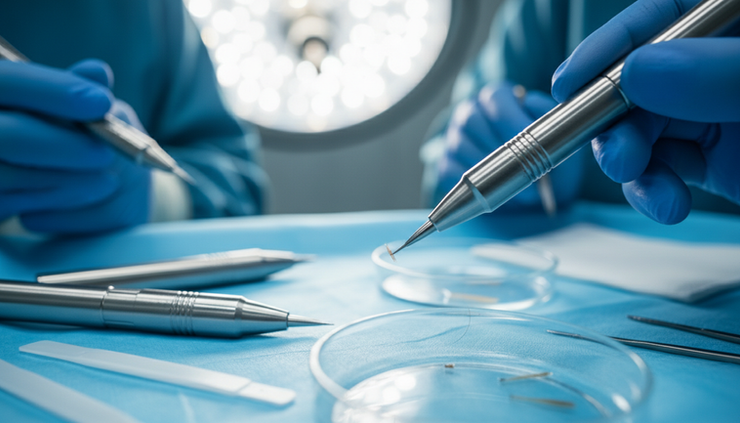
Precision implanters use a different mechanism. A graft is loaded into a small hollow needle or channel, then inserted into the recipient area by pressing a plunger or controlled release system. The tool allows the operator to place the graft into the scalp with less direct squeezing.
That difference sounds small. In the setting of thousands of grafts, it becomes meaningful.
Traditional forceps placement | Precision implanter placement |
Graft is often held directly during insertion | Graft is carried inside or along the implanter channel |
More handling steps may be needed | Fewer touch points may reduce mechanical stress |
Site creation and placement are usually separate steps | Some systems combine incision and placement |
Angle and depth depend heavily on manual insertion | Tool design can help maintain consistent depth and direction |
This does not mean implanters replace surgical judgment. They do not. The surgeon still needs to plan the hairline, choose graft distribution, manage density, and protect blood supply in the recipient area. The implanter simply gives the team a more controlled way to complete a very delicate task.

Less tissue trauma can mean a stronger start
A transplanted graft needs to reestablish itself after placement. For a short period, it survives by diffusion from surrounding tissue before new blood supply supports it. This early window is one reason gentle handling matters so much.
Precision implanters can reduce trauma in several ways.
They limit crush injury
Follicles are vulnerable to compression. When a graft is squeezed too tightly, the force can damage the bulb or surrounding tissue. Even slight injury may affect how well the graft grows later.
With an implanter, the graft can be loaded and seated with less repeated gripping. The team still has to load it carefully, but the insertion step can involve less direct pressure than forceps placement.
They support cleaner insertion
When a graft is pushed into a recipient site, it can bend, fold, or catch at the edge of the opening. This may create a poor fit or place stress on the follicle. A precision implanter guides the graft along a defined path, which can reduce twisting and folding.
A clean insertion also helps avoid “popping,” where nearby grafts are pushed back out of the scalp as new grafts are placed. Popping can raise handling time and add extra manipulation. Tools that improve control can help the team keep each graft seated.
They help control depth
Depth is easy to underestimate. If a graft sits too shallow, it may dry, dislodge, or heal with a raised appearance. If it goes too deep, it may form a small pit or face more tissue pressure. Neither outcome is ideal.
Precision implanters give operators a better sense of placement depth, especially when the tool has a consistent needle length or depth-limiting design. This can help the team place grafts at a level that supports healing and natural growth.
Angle, direction, and density become more consistent
Natural hair does not grow straight out from the scalp like bristles. It changes angle by region. The frontal hairline often grows at a flatter angle. The temples may require sharp directional planning. The crown has a swirl pattern that must be respected.
A good FUE result depends on this geometry. Even healthy grafts can look unnatural if they point in the wrong direction.
Precision implanters can help with:
Angle control
The tool allows the operator to approach the scalp in a planned direction and release the graft along that line.
Spacing
Consistent insertion may help maintain planned density without forcing too many grafts into a tight area.
Orientation
Some implanter methods allow closer attention to how single-hair and multi-hair grafts are placed.
Speed with control
A trained team can place grafts efficiently while still protecting tissue.
This matters most in visually sensitive areas. The first rows of the hairline usually need single-hair grafts placed at low angles. Behind them, larger follicular units can add density. In the crown, poor directional planning can create an artificial look even if survival is high.
The tool does not design the result. It helps execute the design.

Long procedures create special risks
Many improvements in FUE focus on the procedure itself, but time is one of the biggest hidden pressures. In larger sessions, grafts may spend extended periods outside the body. Teams use chilled holding solutions, hydration, careful sorting, and timed placement to protect them.
Precision implanters can help by making placement more orderly and predictable. When the team can load and place grafts in a steady rhythm, fewer grafts may sit exposed on trays or wait too long after preparation.
That said, speed alone is not the goal. Fast placement with poor technique can still damage tissue. The aim is controlled efficiency, where the team reduces unnecessary delay while keeping every movement gentle.
Several workflow details often matter alongside implanter use:
Keeping grafts moist at all times
Limiting air exposure during sorting and loading
Maintaining appropriate temperature during holding
Separating grafts by size and hair count
Matching graft type to the correct recipient zone
Avoiding excessive packing that may affect blood flow
Rotating team members to reduce fatigue during long sessions
Fatigue can be real in hair restoration. A team may repeat tiny, precise movements for hours. Tools that reduce repetitive strain and improve consistency can support steadier performance as the day goes on.
The best results still depend on the surgical team
It is tempting to treat a device as the main reason for a better outcome. In FUE, that view is too simple. Precision implanters are useful, but they are only as good as the hands using them.
A strong team must understand the full biology and artistry of transplantation. That includes donor management, graft selection, hairline design, storage, placement pattern, and aftercare. Poor extraction can damage grafts before an implanter ever touches them. Rough loading can harm follicles even if insertion is gentle. Overly dense packing can stress the recipient tissue no matter what tool is used.
Training changes how the tool performs
Implanter systems have a learning curve. The operator must load grafts in the correct position, choose the right needle size, maintain the desired angle, and release the graft without forcing it. Assistants must coordinate sorting and loading so grafts do not dry out or become mismatched.
A well-trained team uses the tool to protect grafts. An untrained team may simply add another step.
Patient factors still matter
Graft survival also depends on the patient. Scalp health, blood flow, smoking, certain medications, inflammation, and adherence to aftercare can affect healing. The same method may not produce identical results for every person.
Good clinics explain this clearly. They avoid guaranteeing a specific survival rate because biology is not fully predictable. Instead, they focus on reducing preventable damage at every stage.
How implanter refinements are shaping modern FUE
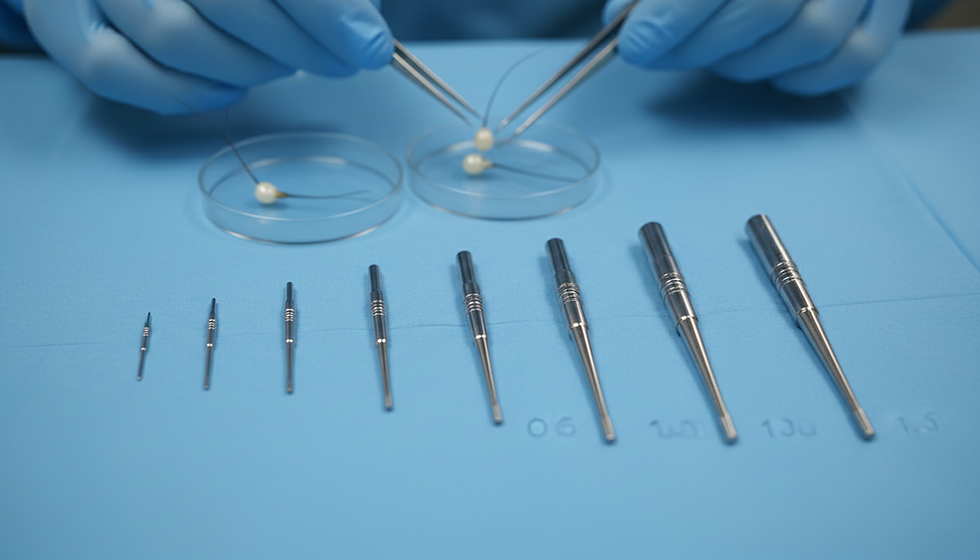
Modern precision implanters are not all the same. Some tools use different needle shapes, loading methods, grip designs, and release mechanisms. The trend is toward better control with less graft manipulation.
Common refinements include:
Finer needles that match graft size more closely
Smoother channels to reduce friction
More stable plungers for controlled release
Ergonomic grips that reduce hand fatigue
Depth guidance to support consistent placement
Systems that allow preloading by trained assistants
These changes may seem modest when viewed one at a time. Together, they address the everyday challenges of FUE: tissue fragility, long case duration, consistent angles, clean depth, and efficient graft flow.
The strongest value appears when technology supports better behavior. A refined implanter can encourage lighter touch, reduce unnecessary handling, and help maintain a planned pattern across hundreds or thousands of placements.

What this means for patients evaluating FUE options
For someone comparing hair restoration methods, the presence of precision implanters can be a useful talking point. It should not be the only one.
Better questions include:
Who designs the hairline and recipient pattern?
Who performs extractions and placements?
How are grafts stored while outside the body?
How does the team limit graft handling?
What steps reduce dehydration and temperature stress?
How does the clinic manage long sessions?
What aftercare instructions support healing?
The answer should be specific. A vague claim that a clinic uses modern tools does not reveal much. A clear explanation of handling, storage, angle control, and team roles says far more.
Precision implanters can support better graft survival, but they work best as part of a disciplined process. The real advantage comes from combining careful extraction, gentle storage, thoughtful design, and controlled placement.
The takeaway
FUE has improved because teams have paid attention to the small details that determine whether grafts live or fail. Precision implanters are one of those details. By reducing direct handling, supporting cleaner insertion, and helping control depth and angle, they can give transplanted follicles a better chance during a demanding procedure.
They are not magic, and they do not replace surgical skill. But in a field where thousands of tiny decisions shape the final result, a tool that reduces trauma and improves consistency can make a real difference. The best outcomes come when precise instruments meet patient planning, experienced hands, and strict graft-care habits from start to finish.

Comments